Product launches, OKRs, anonymous Q&A, go/ links and an internal meme generator. Turn on the apps your team needs, pay per person per app, and run them all off one member list.
Short, memorable links your whole company can guess. Anyone can claim go/roadmap in seconds, links stay owned and auditable, and nobody pastes a forty-character URL into chat again.
Each one used to cost a meeting, a thread, or somebody's memory. Each one is an app here.
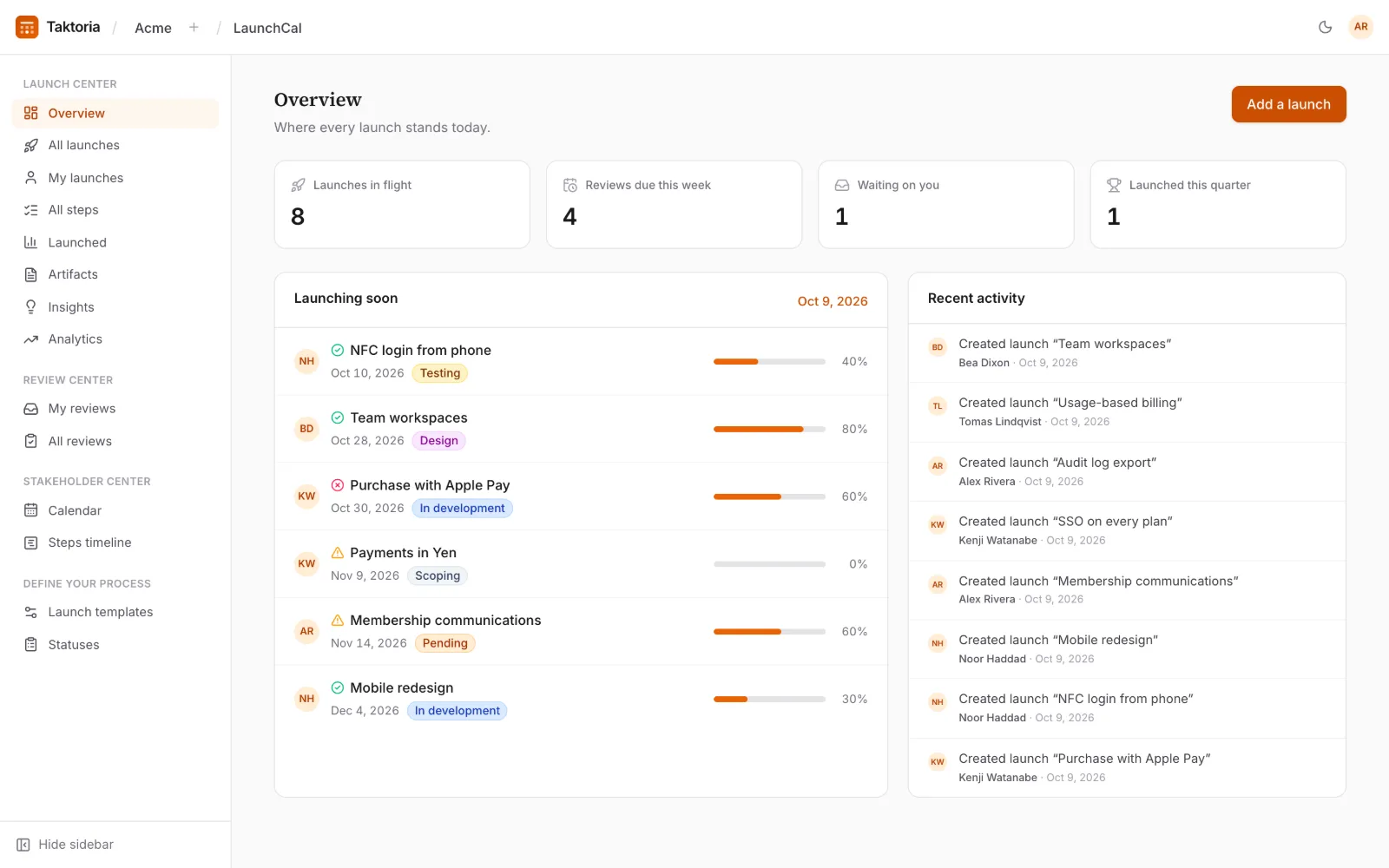
Before a launch
“What has to clear before this ships, and who else needs to know?”
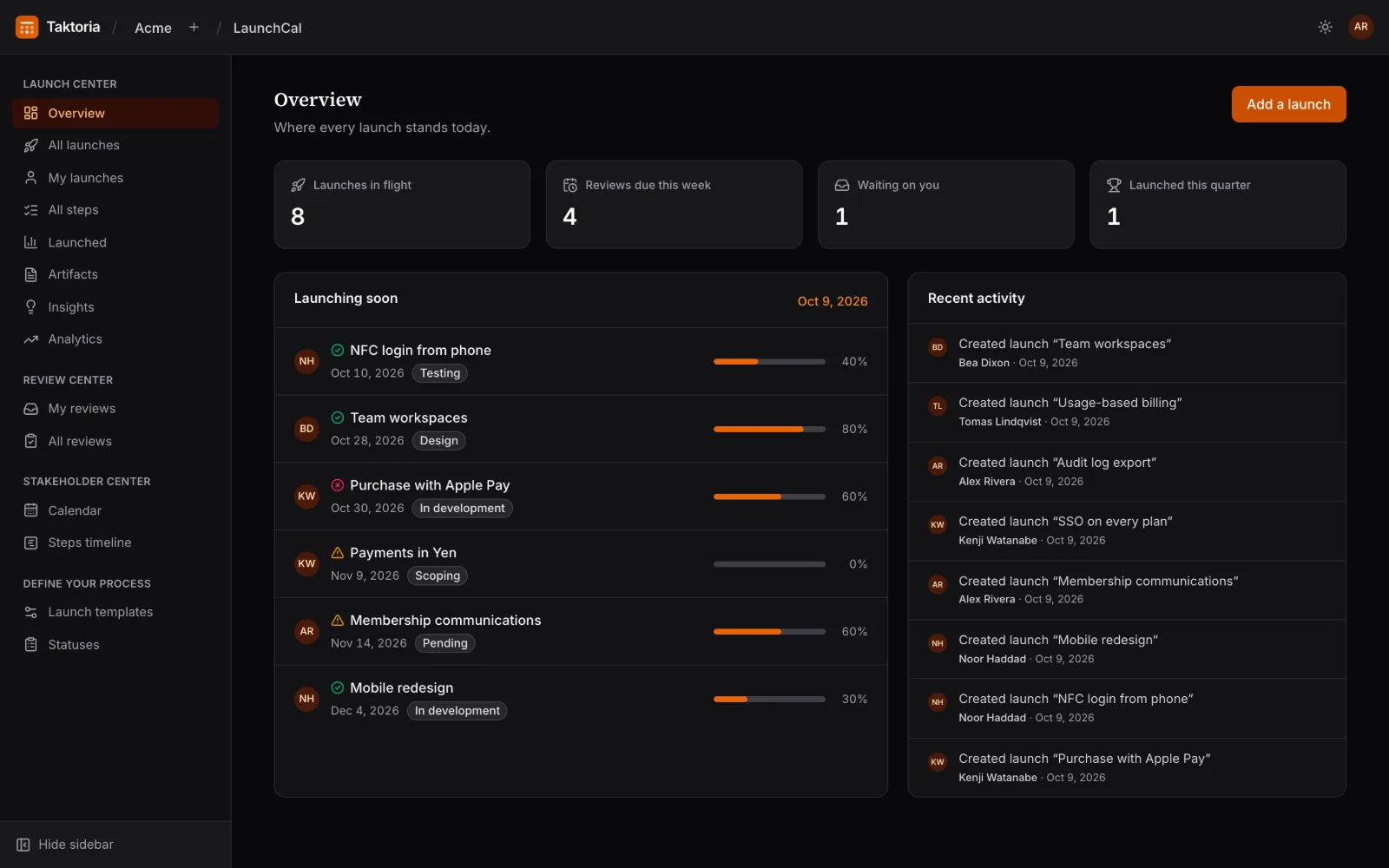
LaunchCal generates the checklist from your own process, back-scheduled from the date, and gives every reviewing function its own queue.
Every quarter
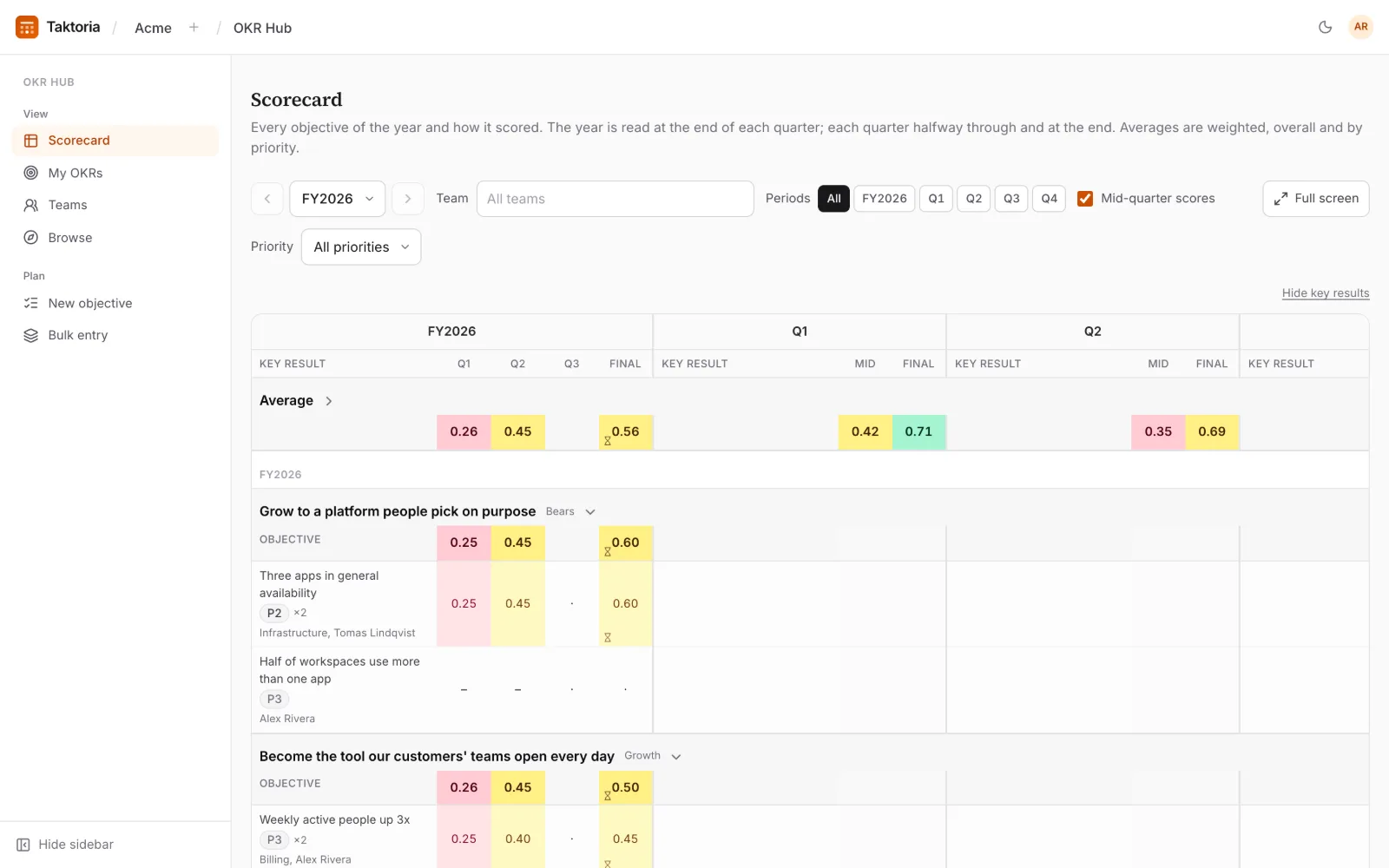
“What are we trying to achieve, and are we anywhere near it?”
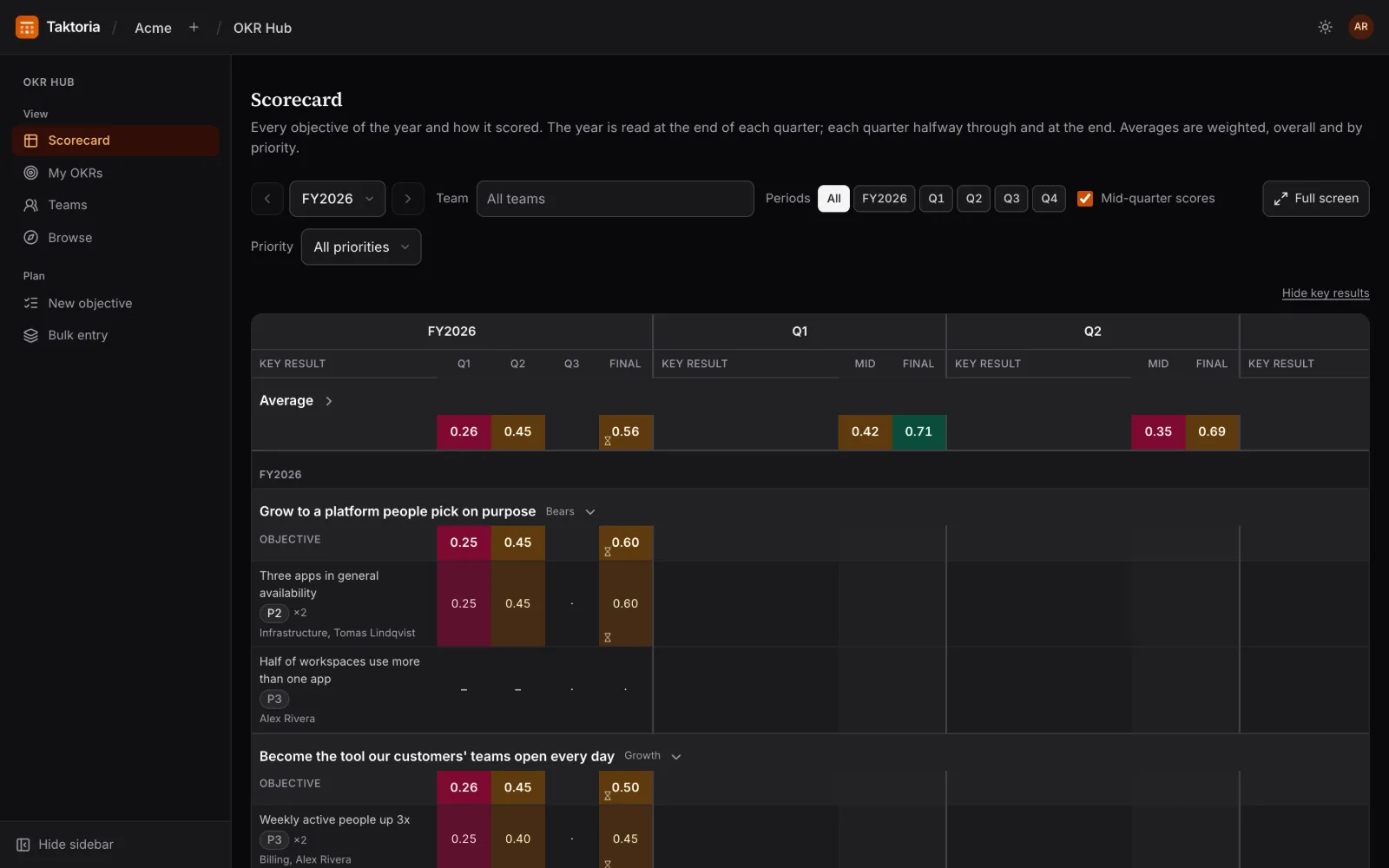
OKR Hub keeps objectives and key results with the grade on the key result, checked in on a rhythm rather than remembered at the end.
In the room
“What does everyone actually want to ask?”
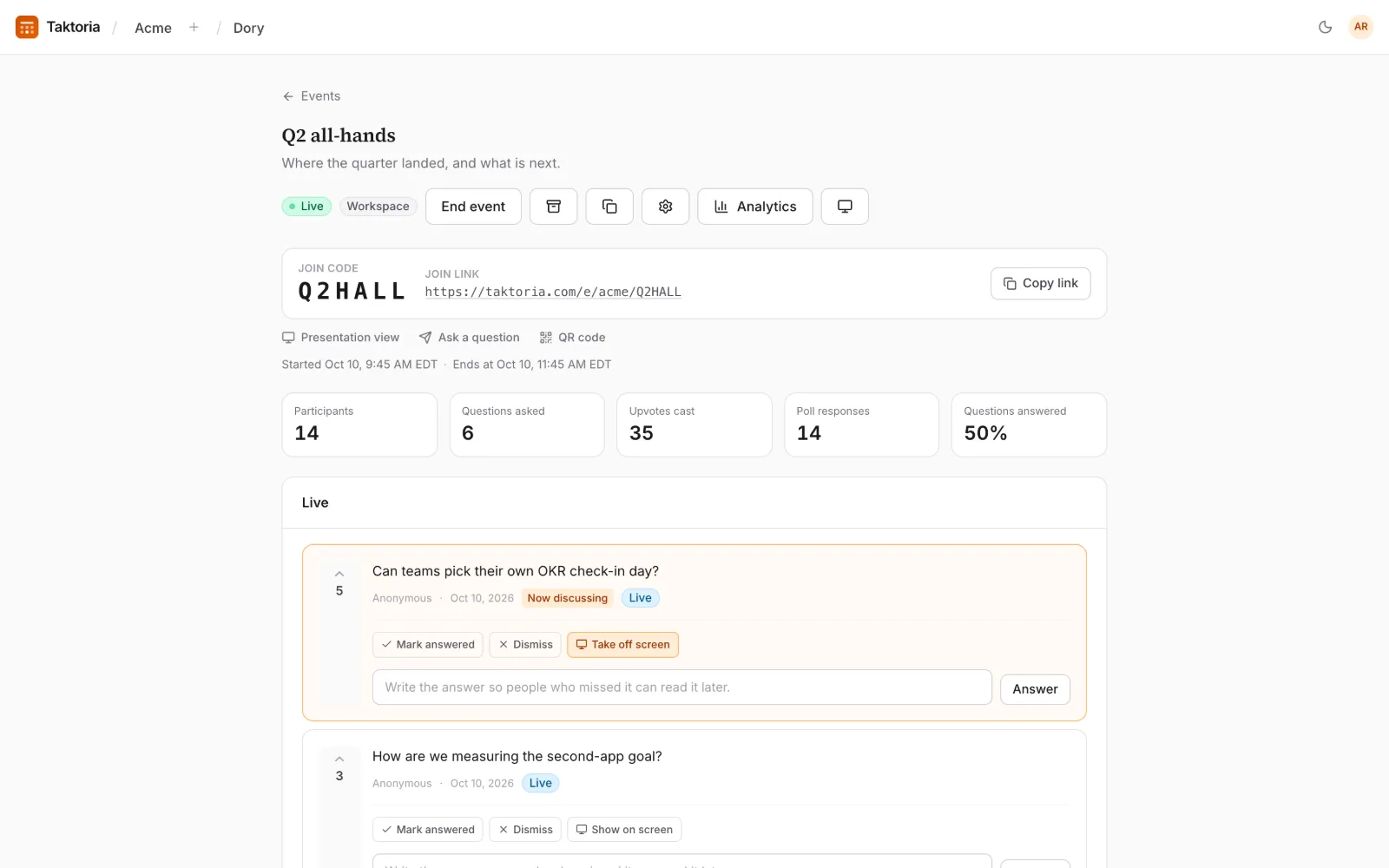
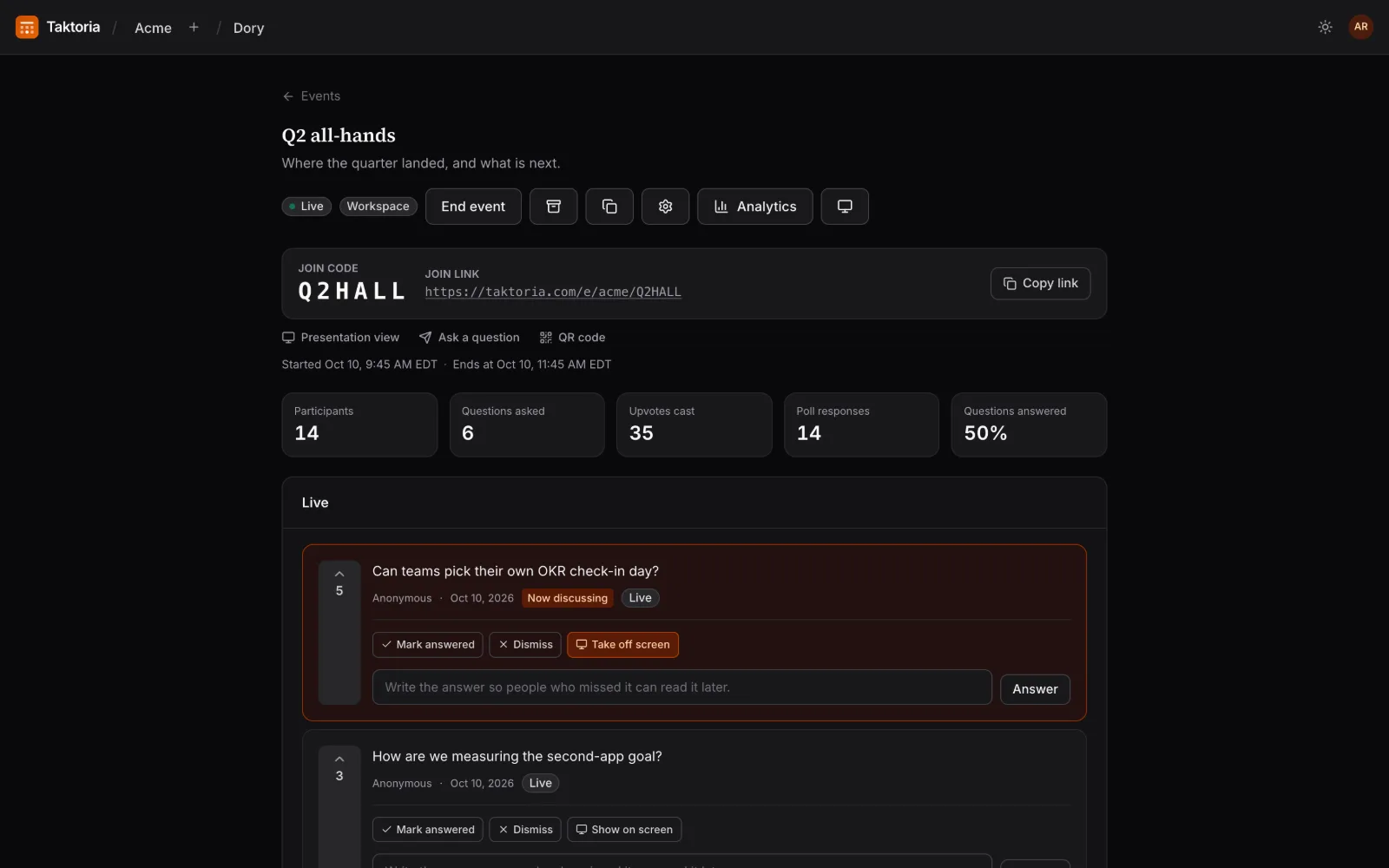
Dory takes questions and upvotes from the audience, anonymously if that is what it takes to get the real one asked.
Ten times a day
“Where is that doc again?”
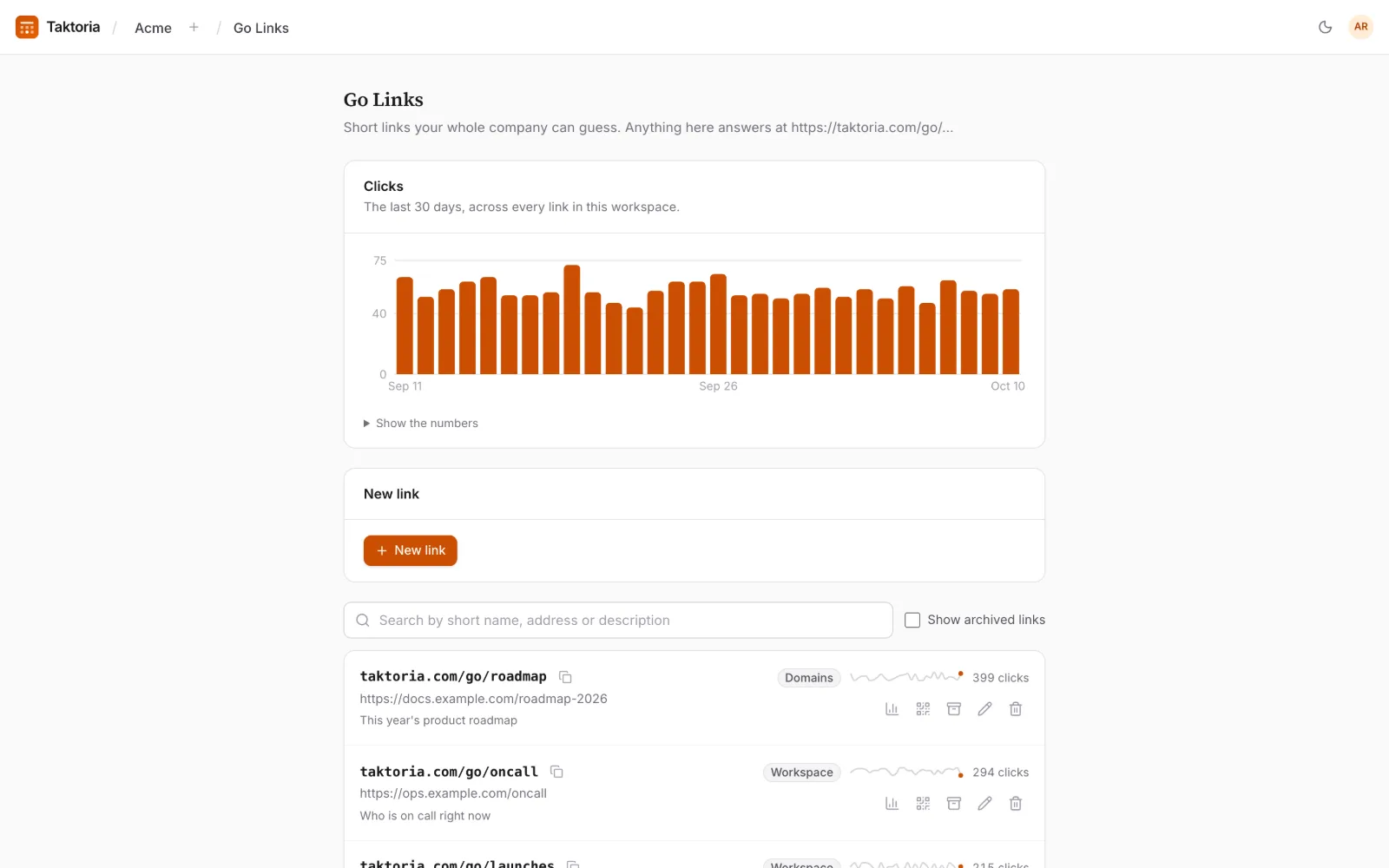
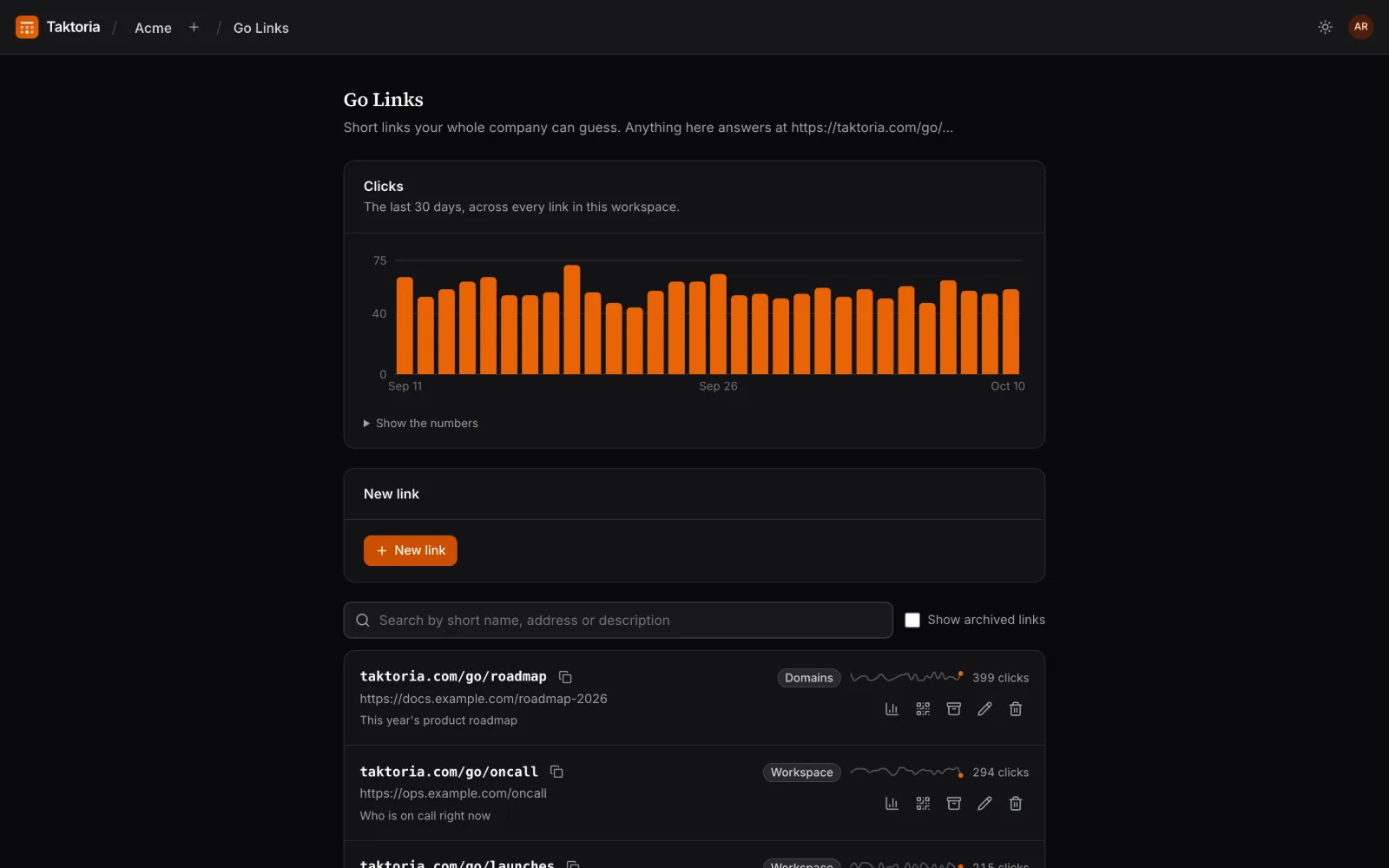
Go Links turns it into go/roadmap: short enough to say out loud, and owned by somebody so it does not rot.
Between all of it
“How does news actually travel here?”
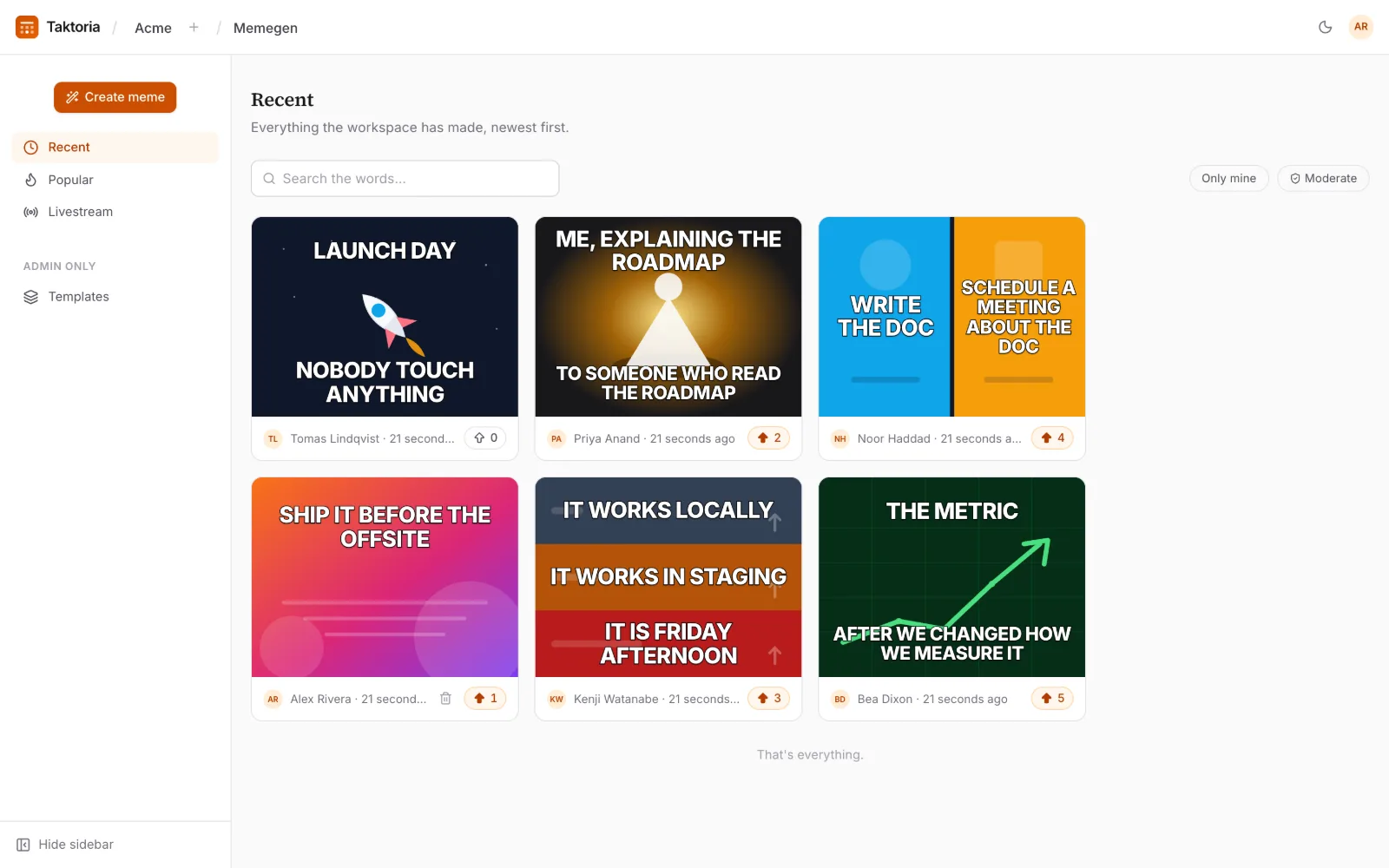
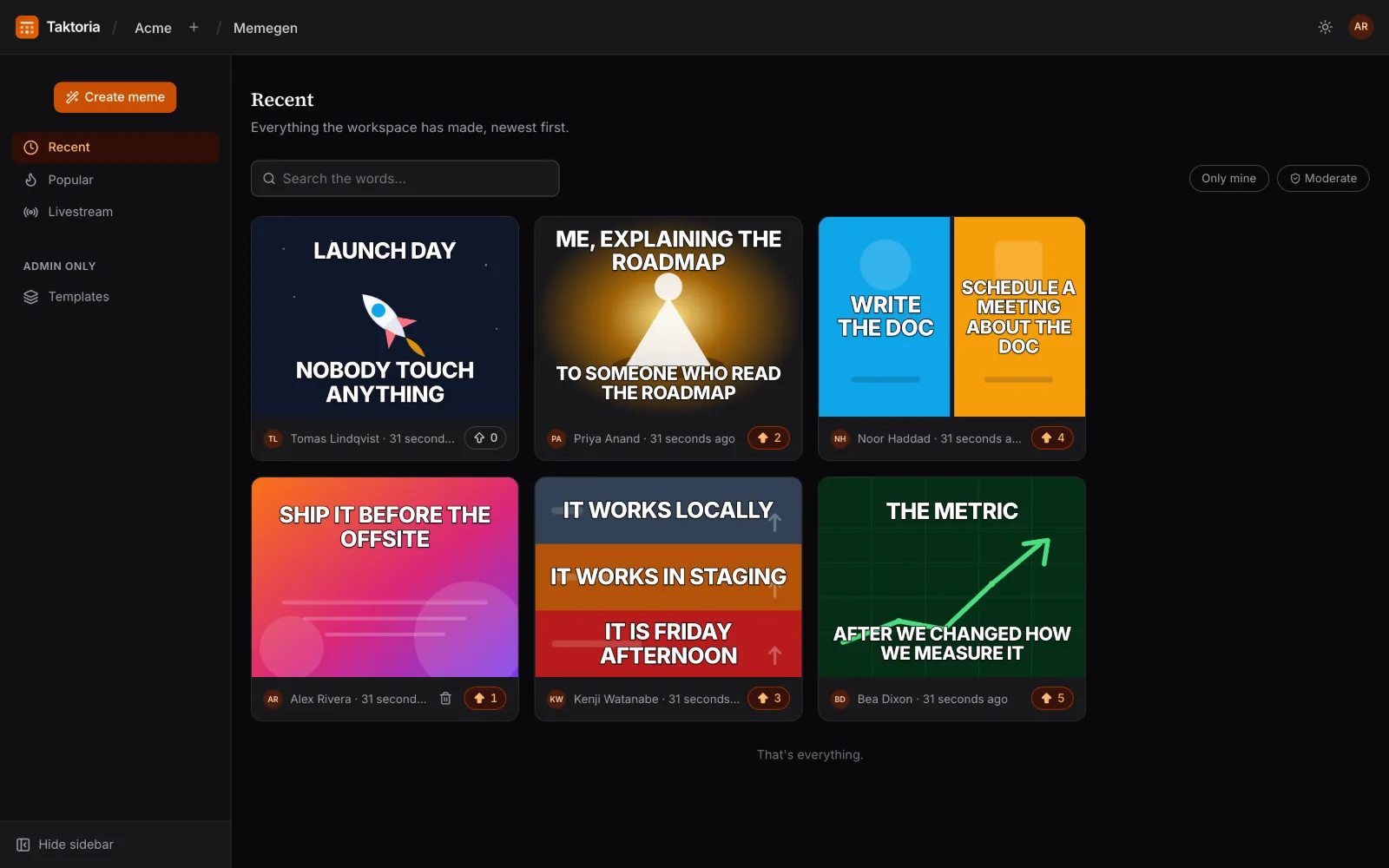
Memegen, honestly. It is how an internal announcement gets read, so it may as well be fast to make and easy to find again.
Twice a year
“Are we holding everyone to the same bar?”
Calibration is the meeting where managers compare their ratings side by side and settle on one standard, with every change keeping the reason it changed. It is the one still to come.
How it works
Start with one app. The workspace underneath is the same whichever you begin with, so the second one costs almost nothing.
1
Create a workspace
One workspace for the company, with its own name and its own address. Every app lives inside it.
2
Add your people once
One member list and one set of teams, shared by every app. There is no second place to remember to remove a leaver from.
3
Turn on the apps you want
Subscribe per app, with a fortnight free and no card. The ones you have not turned on stay out of the way.
4
Give seats to the people who use them
A seat per person per app, so the company is not paying for everyone on behalf of the team that wanted one thing.
5
Everyone signs in once
Single sign-on, admin and member roles, and per-app access checked on the server for every request.
6
Automate the rest
The dashboard is a client of the same REST API, with typed SDKs generated from a Fern definition.
One platform, not five subscriptions
What every app inherits by being here, rather than something each one had to build.
One workspace, one member list
Add somebody once. Every app sees the same people, the same teams and the same roles, so there is no third place to remember to remove a leaver from.
Priced by what is actually used
Subscribe per app and assign a seat to whoever uses it. Dory is priced by how big an event may get, plus a seat for each person who hosts, because a Q&A is mostly people who will never need one. Nobody pays for the meme generator on behalf of a company that only wanted the launch calendar.
SSO and roles that carry across
Single sign-on, admin and member roles, and per-app entitlement checked on the server for every request, not hidden in the navigation.
Notifications that respect people
Slack and email, rate-limited and digested, delivered by a worker rather than on the request path so nothing slow can hold a page open.
A real API
The dashboard is a client of the same REST API, with typed SDKs generated from a Fern definition.
Fourteen languages, from the first screen
Every page is translated and opens in your browser's language, including the marketing site you are reading, with regional spelling and formats for the US, UK, Canada, Australia, India, Latin America and Québec. The legal documents are the one exception: they are in English.
Built for the whole company, not the pilot team
The awkward part of an internal tool is not the first ten people. It is the thousandth, the tenth workspace, and the all-hands where everybody arrives in the same ninety seconds.
A workspace holding ten thousand launches behaves like one holding ten. Nothing here gets slower because your company got bigger.
Telling a thousand people something is a job that runs in the background, grouped and paced, rather than a page that hangs while it sends and an inbox that pays for it.
An event where the whole company arrives in the same ninety seconds is the case this was designed around, not the one that breaks it.
One workspace never sees another's, and what a person may reach is decided on the server for every request. Growing to five hundred people widens nothing by accident.
Questions teams ask first
Mostly the sceptical ones. They deserve straight answers.
A platform of workplace apps that share one workspace, one member list and one bill. LaunchCal runs product launches, OKR Hub keeps objectives and key results honest, Dory takes questions and upvotes in meetings, Go Links gives you go/anything, and Memegen is the internal meme generator. Calibration, for manager-led performance reviews, is on the way. Each one started as a practice we used at Google.
No. Subscribe to the apps you want and assign seats to the people who use them; the rest stay out of the way. The workspace underneath is the same whichever you start with, so adding a second app means no second member list, no second bill to reconcile and nobody signing up again.
You pay only for the people who actually use each app. A workspace can have two hundred members while ten of them hold LaunchCal seats, and you are billed for ten. You choose how many seats to pay for, changes are prorated, and a seat taken from someone stays free for somebody else. Dory is billed by the size of its events, plus a seat for each host.
Yes. Every app starts with a 14-day free trial, no card required to explore the workspace. Your launch process, teams and templates are seeded with a sensible default you can edit.
Yes. Connect Slack once and Taktoria posts new launches, review decisions and launch announcements to your channel, and DMs reviewers when a step lands in their queue. Email goes out too, and reviewers get a single daily digest instead of a message per step.
Everything the dashboard does, the API does: the dashboard is a client of the same endpoints. Taktoria ships a REST API with typed SDKs generated from a Fern definition, so you can create launches, generate review checklists, record decisions and assign seats from your own systems.
That is what it was built for. A workspace holding ten thousand launches behaves like one holding ten, what a person may reach is decided on the server for every request rather than implied by what the navigation shows them, and telling a thousand people something runs in the background, grouped and paced, rather than holding a page open while it sends. An event where the whole company arrives in the same ninety seconds is the case this was designed around.
Start with one app, or all of them
Fourteen days free, no card. Subscribe per app and assign seats to the people who actually use it.